
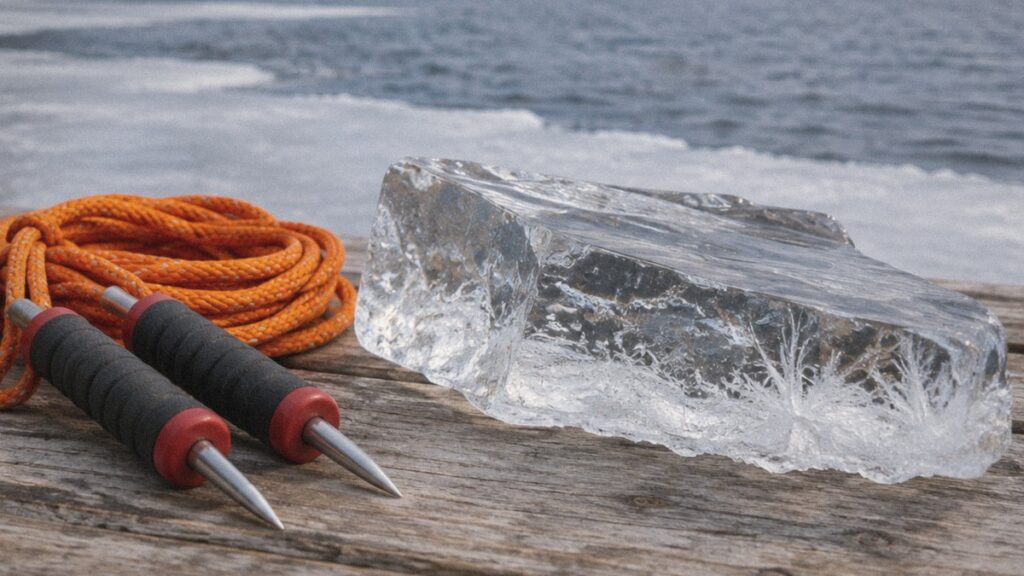
Every November the same question starts making the rounds, on docks in Wayzata, at the bar in Excelsior and in every group text with an ice house in it: when is the lake going to freeze? The short answer is early December, give or take. The longer answer is that Lake Minnetonka ice has a long history of keeping us guessing. Here’s what the records say, why your bay will freeze before the big lake does, and the ice safety basics every local should know before taking that first step off shore.
What “Ice-In” Actually Means
A skim of ice in Carson’s Bay on a cold morning doesn’t count. The Minnesota DNR records ice-in when the entire lake is frozen over and the ice cover stays put for the rest of the winter. On a lake with 37 bays and more than 14,500 acres of water, that takes a while. Shallow bays can be locked up for weeks while open water still churns out on the main lake.
It also means you won’t see an official ice-in date announced the moment it happens. The DNR doesn’t post current-year dates in real time, partly for safety (a frozen lake is not the same as a safe lake) and partly because early ice sometimes melts away and the lake has to freeze all over again.
When Does Lake Minnetonka Usually Freeze?
Historically, Minnetonka freezes over in early December, with an average ice-in date right around December 8. But “average” hides a lot of drama. Here are some of the more memorable freeze-ups:
| Winter | Ice-In | The Story |
|---|---|---|
| 1991–92 | Nov. 25 | The winter that started with the Halloween Blizzard. Skating before Thanksgiving dinner. |
| 2001–02 | Jan. 2 | Held the record for latest ice-in for more than 20 years. |
| 2015–16 | Dec. 31 | The lake waited until New Year’s Eve to make up its mind. |
| 2019–20 | Dec. 2 | A cold start to winter, right on schedule. |
| 2020–21 | Dec. 24 | Frozen just in time for Christmas Eve. |
| 2023–24 | Jan. 13 | The latest on record, beating 2002 by 11 days, after the warmest December the Twin Cities had ever seen. |
| 2025–26 | Early Dec. | A cold late November gave the lake its earliest ice-in since 2019. |
Dates from Minnesota DNR ice-in records and reporting by the Star Tribune, CBS News and FOX 9.
The bigger trend is hard to miss. The Minnesota State Climatology Office says lakes across the state that once froze between early November and early December now tend to freeze between mid-November and mid-December. Longtime locals who remember skating on the bays over Thanksgiving weekend aren’t imagining it.
The 2024 Whiplash Winter
After its record-late freeze on January 13, 2024, the lake turned right around and declared ice-out on March 13, just two days short of the all-time record set in 1878. That’s barely two months of ice on Minnesota’s most famous winter playground.
Why the Bays Freeze Before the Big Lake
If you live on a quiet bay, you’ve probably watched your own shoreline lock up while the Lower Lake still looks like October. There’s real science behind that.
The whole lake has to cool down first. Water is heaviest at about 39 degrees. As the surface cools in the fall, that colder, heavier water sinks and warmer water rises to take its place. The surface can’t freeze until the entire water column has cooled to around 39 degrees. A shallow bay has far less water to cool than a deep basin, so it gets there first.
Wind keeps the big water moving. Open stretches like the main Lower Lake catch the full force of a northwest wind, which mixes the water and breaks up thin skim ice as fast as it forms. Sheltered bays tucked behind points and islands sit calm on cold, still nights, which is exactly when ice forms.
Moving water rarely freezes well. The channels that connect Minnetonka’s bays carry current, and current wears ice down from below. That’s why channels stay thin or open long after the bays around them are solid, and why they’re the most dangerous ice on the lake all winter long. (Want to know where all those bays got their names? Here’s the story.)
And On the Other End: Ice-Out
Ice-in gets the questions, but ice-out gets the party. Ice-out records on Lake Minnetonka go back to 1855, making them some of the longest-running lake records in the state. Today Freshwater and the Hennepin County Sheriff’s Office Water Patrol make the call when a patrol boat can travel shore to shore, through every channel and around every island without being stopped by hard ice. Over the years, the lake has also been called ice-free when a car left on the ice finally fell through, or when a boat could make it from Excelsior to Wayzata.
- Median ice-out: April 13
- Earliest: March 11, 1878
- Latest: May 5, in both 1857 and 2018
- Last three springs: March 13, 2024; March 29, 2025; April 3, 2026
Ice Safety Basics
First, the rule that matters most: no ice is ever 100% safe. The DNR doesn’t measure ice thickness on Minnesota lakes, so checking it is on you. Here are the DNR’s minimum guidelines for new, clear ice:
| Clear Ice Thickness | What It Can Hold |
|---|---|
| Under 4″ | Stay off |
| 4″ | Walking, skating, ice fishing on foot |
| 5″ to 7″ | Snowmobile or small ATV |
| 7″ to 8″ | Side-by-side ATV |
| 9″ to 10″ | Small car or SUV |
| 11″ to 12″ | Medium SUV or small truck |
| 13″ | Medium truck |
| 16″ to 17″ | Heavy-duty truck |
| 20″ or more | Heavy-duty truck with a wheelhouse |
White ice is weaker. Snow that melts and refreezes on top of the lake forms cloudy white ice, which is only about half as strong as clear ice. The DNR’s advice is to double the guidelines above when you’re on white ice. Parked vehicles also need thicker ice than moving ones, so spread out and don’t leave a truck sitting in one spot for hours.
Minnetonka’s trouble spots. The Hennepin County Sheriff’s Office says the channels between bays always have the thinnest ice on the lake. Seton Channel, Zimmerman’s Pass and Coffee Channel have all had thin ice and open water warnings, and snowmobiles have gone through in Seton Channel. Also watch out for:
- Open water around docks and boathouses with bubblers or de-icers running
- Areas near public boat accesses
- Pressure ridges, where shifting ice buckles and cracks
- Anywhere water flows in or out, like inlets, culverts and springs
Before you head out:
- Check the ice as you go, at least every 150 feet. Ice can be a foot thick in one spot and an inch thick a few yards away.
- Carry ice picks around your neck, and wear a life jacket or float suit, especially early in the season.
- Bring a spud bar or auger to test ahead of you.
- Go with a buddy, and tell someone on shore where you’re going and when you’ll be back.
- Keep your phone in a waterproof bag.
The Local Rule of Thumb
Just because the DNR or the neighbors say the lake is “in” doesn’t mean the ice under your boots is ready. Early ice is the most tempting and the most dangerous. Give it time, check it yourself and stay out of the channels.
Make Your Guess
So when will Lake Minnetonka freeze this year? History says early December, the last few winters say anything goes, and the lake will decide for itself. If your dock and boat aren’t put away yet, now’s the time. Our winterizing checklist walks through it. Then tell us your ice-in guess in the comments on our Facebook page, and we’ll see who gets closest.
Sources: Minnesota Department of Natural Resources ice-in records and ice thickness guidelines; Minnesota State Climatology Office; Freshwater; Hennepin County Sheriff’s Office Water Patrol; reporting by the Star Tribune, CBS News Minnesota, KARE 11 and FOX 9. Ice conditions change quickly. Always check the ice yourself.